
Designing Paradise: Inside the Architecture of Bali Villas in Seminyak
At Karma Interiors, we have always believed that the space you inhabit dictates the energy of your life. Whether it’s the weave of a carpet or the flow of a floor plan, design matters. Recently, our focus has shifted from the textiles under your feet to the grander architecture of tropical living. There is no better example of “good karma” in design than the traditional yet modern Bali villas of Seminyak.
Bali is a unique case study for interior designers. It blends the outdoors with the indoors in a way that Western architecture rarely dares. In Seminyak, specifically, the villas are not just places to sleep—they are masterclasses in spatial harmony. Let’s deconstruct the design elements that make bali villas seminyak—and specifically standout properties like the Villa Kinaree Estate—a marvel of modern living.
The Concept of Open-Plan Tropical Living
In cold climates, architecture is about protection—keeping the elements out. We build thick walls, double-glazed windows, and insulated roofs. In Bali, architecture is about invitation—letting the elements in.
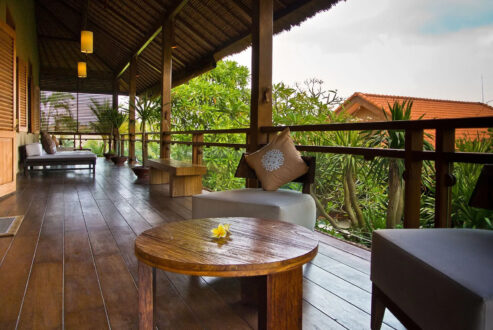
The quintessential Bali villas in Seminyak feature open-air living pavilions. At the Kinaree Estate, the main living areas are vast, open spaces that look directly out onto the swimming pool and gardens. There are no glass doors to slide open; the room simply ends where the garden begins.
From a design perspective, this creates a seamless visual flow. It erases the boundary between “house” and “nature.” The high-vaulted ceilings, often made of alang-alang (woven grass) or exposed teak timber, draw the eye upward, creating a sense of grandeur and airiness. This natural ventilation keeps the space cool, reducing the need for artificial air conditioning in the communal areas. It’s sustainable, it’s beautiful, and it creates a social atmosphere that is impossible to replicate in a closed-off hotel room.
Materials and Textures: A Tactile Experience
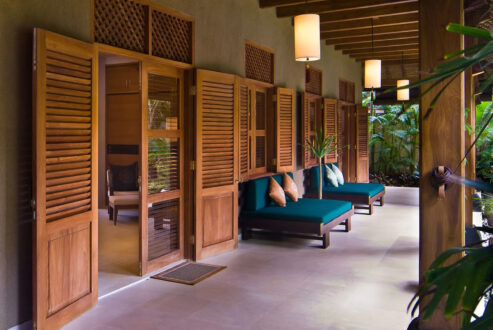
We used to obsess over the texture of carpets, so we naturally gravitate toward the materials used in these estates. A luxury bali villa in seminyak relies heavily on natural materials. You won’t find much plastic or synthetic drywall here. Instead, you see Palimanan stone, teak wood, terrazzo, and marble.
The floors are often cool, polished stone, which feels incredible underfoot in the tropical heat. This is a crucial design choice. In a hot climate, the floor acts as a heat sink, keeping the ambient temperature down.
The furniture is typically bespoke, crafted from local woods with intricate carvings that tell a story of Balinese craftsmanship. In Villa Kinaree, the use of warm wood tones contrasts beautifully with the lush green of the gardens and the turquoise of the pool. It’s an earthy, grounding color palette. As designers, we appreciate that the color comes from the materials themselves, not from paint. The “decor” is the grain of the wood and the texture of the stone.
The Bedroom as a Sanctuary
While the living areas are open and social, the bedrooms in bali villas seminyak are designed as private, enclosed sanctuaries. This duality is crucial for “Karma”—the balance between social energy and private restoration.
The bedrooms at Kinaree Estate are fully air-conditioned and enclosed, offering a retreat from the heat and humidity. But the design continuity remains. The use of canopy beds with sheer mosquito nets adds a touch of romance and nostalgia, reminiscent of colonial elegance. These nets are functional, yes, but they also soften the room, adding a vertical layer of texture that makes the high ceilings feel more intimate.
The bathrooms deserve special mention. Balinese design pioneered the “semi-outdoor” bathroom. There is something deeply primal and freeing about showering in a private, walled garden, with the sky above you and smooth river stones under your feet. It transforms a daily chore into a spa ritual.
The Role of Water in Design
Feng Shui and Vastu Shastra both emphasize the importance of water in a home to promote flow and prosperity. In bali villas seminyak, the swimming pool is not just an amenity; it is the focal point of the architectural layout.
The buildings are usually arranged in a U-shape or L-shape around the pool, ensuring that every room has a view of the water. At Kinaree, the pool is lined with green Sukabumi stone. This is a specific volcanic stone found in Indonesia that contains zeolites, which naturally purify the water. But aesthetically, it gives the water a shimmering, deep emerald hue that mimics a natural lagoon, rather than the artificial “Windex blue” of standard swimming pools.
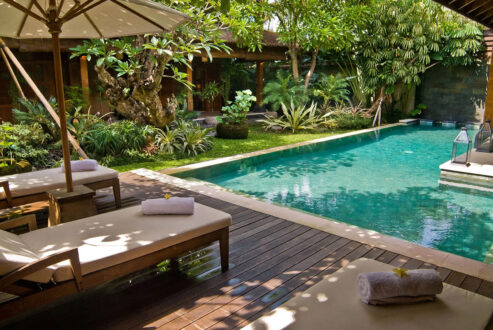
The sound of water—whether from the pool fountains or a koi pond—is a constant, soothing background noise. In a busy area like Seminyak, this “white noise” masks the sounds of the city, creating an acoustic bubble of calm.
Why Design Lovers Choose Villas
For those who appreciate aesthetics, a standard hotel is often disappointing. It’s cookie-cutter design meant to appeal to the masses. Everything is beige, safe, and durable.
A private bali villas seminyak offers character. It feels curated. Every statue, every rug, and every lighting fixture has been chosen to fit that specific space. Staying at the Kinaree Estate is like living inside a design magazine. It inspires you. It shows you how luxury can be comfortable rather than stiff.
If you are looking to bring some “good karma” into your next holiday, look for a property that prioritizes design. Look for the open air, the natural stone, and the thoughtful layout of a true Balinese villa. It is a reminder that the best interiors are the ones that make us feel connected to the world around us.
Bringing the Outside In: The Science of Biophilic Design
Have you ever walked into a room and immediately felt your shoulders drop and your breath deepen? Chances are, you were experiencing the effects of Biophilic Design.
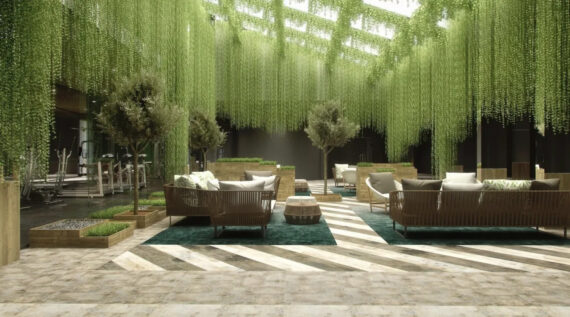
“Biophilia” translates literally to “love of life.” In architecture and design, it refers to the practice of connecting the occupants of a building closer to nature. It is not just about putting a potted plant in the corner; it is a fundamental approach to how we build and live.
More Than Just Aesthetics For a long time, nature in design was treated as decoration. A vase of flowers here, a landscape painting there. But modern research shows that our connection to nature is biological. We spent 99% of our evolutionary history living outdoors. Confining ourselves to sterile, drywall boxes with fluorescent lighting causes stress.
Biophilic design seeks to remedy this. It incorporates natural lighting, ventilation, and landscape features directly into the structure.
Key Elements of Biophilic Interiors
-
Direct Visual Connection: Seeing nature. This is why ocean views or garden views command such high real estate prices.
-
Natural Materials: Using wood, stone, bamboo, and water. These materials have complex, fractal patterns that our brains find soothing.
-
Prospect and Refuge: This is an evolutionary theory. We like spaces that offer a view (prospect) but also feel protected (refuge). Think of a cozy reading nook with a window looking out over a valley.
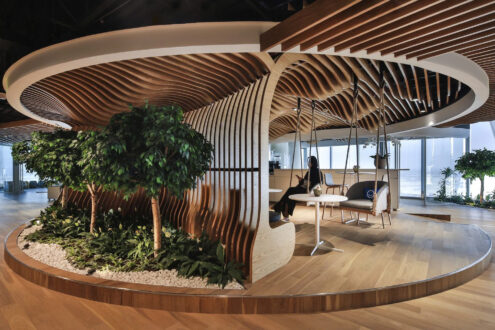
The Health Benefits The impact of this design philosophy is measurable. Studies have shown that hospital patients recover faster in rooms with garden views. Office workers are more productive in spaces with natural light.
For travelers, this is why tropical villas feel so restorative. They are essentially masterclasses in Biophilic Design. The open-air living rooms, the outdoor showers, the sound of water features—they all serve to reconnect our re-wired brains with the natural rhythms we evolved with.
If you are interested in diving deeper into how top architects are using these principles to change the way we live, Architectural Digest has an excellent breakdown of the trend here.
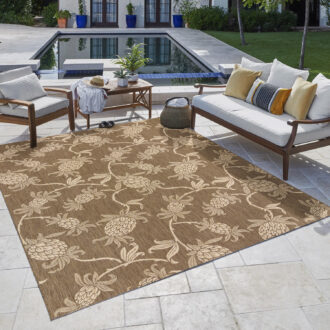
The Great Debate: Can You Use Rugs in a Tropical Climate?
In the world of interior design, there is a persistent myth that carpets and the tropics don’t mix. The logic seems sound: high humidity plus fabric equals mold, right? For years, the standard tropical aesthetic has been bare, cool floors—polished concrete, marble, or tile.
But at Karma Interiors, we disagree. We believe that textiles are the soul of a room, regardless of the climate. A room without softness is an echo chamber; it feels cold and clinical. The secret isn’t avoiding rugs in the tropics; it’s choosing the right ones.
The Material Matters The mistake most people make is bringing a heavy, high-pile wool rug into a humid environment. Wool holds moisture. In a sealed, air-conditioned New York apartment, that’s fine. In an open-air Balinese living room, it’s a disaster waiting to happen.
For tropical living, you need materials that breathe.
-
Jute and Sisal: These natural plant fibers are the gold standard for tropical chic. They are durable, breathable, and their earthy texture complements the wood and stone found in tropical architecture. They don’t trap heat, and they naturally resist dust mites.
-
Flatweaves (Kilims): Because they have no pile, there is nowhere for moisture or sand to hide. They are lightweight and easy to shake out. Plus, their vibrant geometric patterns add a pop of color to the often neutral tropical palette.
-
Seagrass: This is perhaps the most durable option. It is naturally non-porous, meaning it resists stains and moisture.
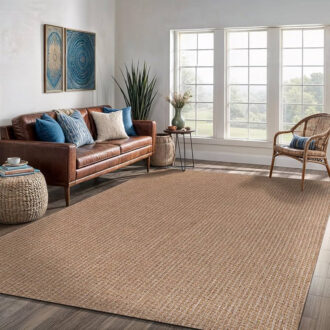
Defining the Zone In open-plan tropical villas, walls are scarce. You might have a living area that flows into a dining area that flows onto a pool deck. Without walls, furniture can feel like it is “floating” aimlessly.
This is where the rug becomes an architectural tool. A large area rug anchors the furniture. It creates a visual “island” that says, “This is the conversation zone.” It separates the dining space from the lounging space without blocking the airflow or the view.
The “Barefoot Luxury” Factor Finally, there is the sensory experience. Tropical living is a barefoot culture. Walking on cool marble is refreshing in the afternoon heat, but in the evening, or first thing in the morning, you want something soft underfoot. A strategically placed rug by the bedside or under the sofa adds that layer of “barefoot luxury” that elevates a space from a house to a home.
So, don’t strip your tropical home bare. Embrace the texture. Just leave the heavy wools for winter, and let the natural fibers shine.